
NEETPGAI
FeaturesBlogComparePricing
Log inStart Free
NEETPGAI

AI-powered NEET PG preparation platform. Master all 19 subjects with adaptive MCQs, AI tutoring, and spaced repetition.

Product

  • Features
  • Subjects
  • Previous Year Questions
  • Compare
  • Pricing
  • Blog

Features

  • Adaptive MCQ Practice
  • AI Tutor
  • Mock Tests
  • Spaced Repetition

Resources

  • Blog
  • Study Guides
  • NEET PG Updates
  • Contact & support

Legal

  • Privacy Policy
  • Terms of Service

Stay updated

© 2026 NEETPGAI. All rights reserved.
    PYQs/2025/Q183
    Verified answer (AI cross-checked + SME reviewed)

    Q183 (2025, Basics of Radiology) — Correct answer: C. Non-invasive and can diagnose PUJ obstruction.
    NEET PG 2025
    Q183
    scan Radiology
    Basics of Radiology
    tier-3 (2/3 verifier agreement)
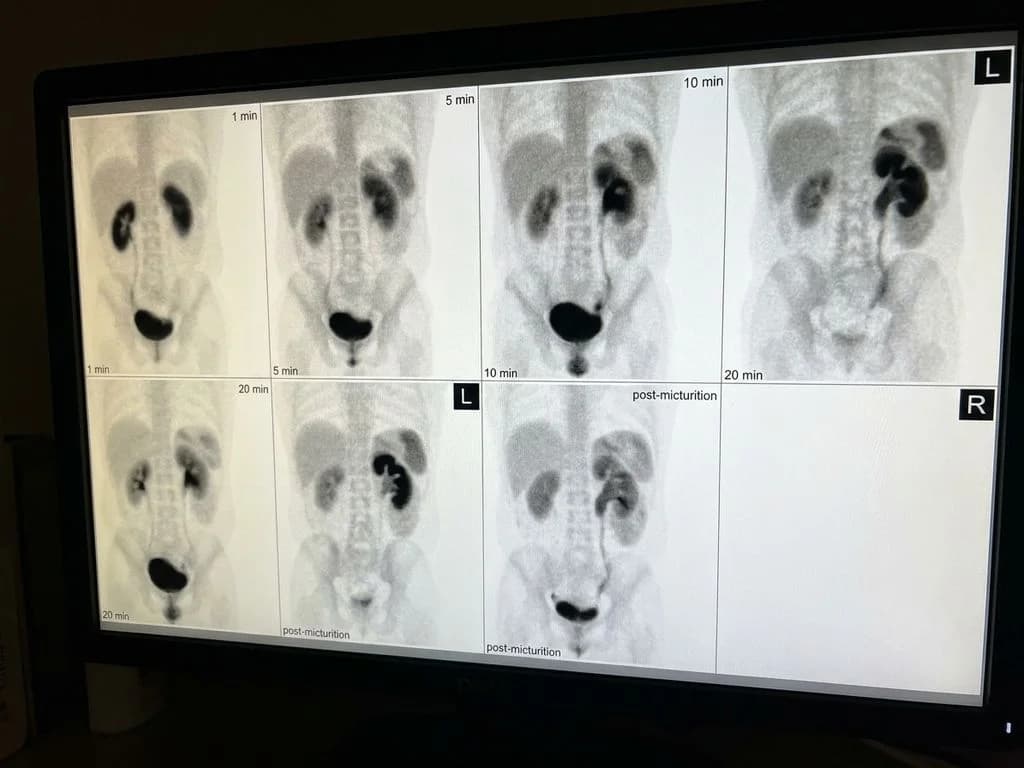
    Clinical image for NEET PG 2025 Q183

    What is correct regarding the image shown?

    A. Percutaneous method
    B. Invasive and therapeutic for bladder lithiasis
    C. Non-invasive and can diagnose PUJ obstruction
    D. Non-invasive and gold standard of cancer

    Correct Answer: C. Non-invasive and can diagnose PUJ obstruction

    The image depicts ultrasound (USG), a non-invasive imaging modality that is the first-line investigation for suspected urinary tract pathology in Indian clinical practice. USG is particularly valuable for diagnosing pyeloureteric junction (PUJ) obstruction because it can demonstrate hydronephrosis (dilated collecting system) and assess the degree of renal parenchymal damage without radiation exposure. In pediatric populations and pregnant women—common presentations in Indian settings—USG is the gold standard for initial evaluation. The key discriminator here is that USG is non-invasive (no instrumentation, no radiation, no contrast injection required) yet provides functional and anatomical information. While it cannot definitively characterize the exact cause of obstruction (which may require diuretic renography or CT), it reliably detects the presence and severity of PUJ obstruction through hydronephrosis grading. This makes it ideal for screening, follow-up, and surgical planning in Indian healthcare where cost-effectiveness and safety are paramount concerns.

    Why the other options are wrong

    A. Percutaneous method — This is wrong because ultrasound is non-invasive and does not require percutaneous needle puncture or catheter placement. The term 'percutaneous method' refers to procedures like percutaneous nephrostomy or percutaneous nephrolithotomy, which are invasive therapeutic interventions. NBE may trap students who confuse imaging modalities with interventional procedures. B. Invasive and therapeutic for bladder lithiasis — This is wrong on two counts: (1) ultrasound is non-invasive, not invasive; (2) while USG can detect bladder stones, it is diagnostic only, not therapeutic. Therapeutic options for bladder lithiasis include cystolithotomy or cystolitholapaxy. NBE pairs ultrasound with a therapeutic claim to test whether students conflate imaging with intervention. D. Non-invasive and gold standard of cancer — This is wrong because although ultrasound is non-invasive, it is not the gold standard for cancer diagnosis in most urological malignancies. CT and MRI provide superior soft-tissue characterization and staging. USG may detect masses but cannot reliably characterize them or detect metastases. NBE exploits the fact that USG is indeed non-invasive to lure students into selecting this option.

    High-Yield Facts

    • Ultrasound is the first-line, non-invasive imaging for suspected PUJ obstruction, especially in pediatric and pregnant populations in India.
    • Hydronephrosis on USG is the key finding indicating PUJ obstruction; grading (mild, moderate, severe) guides clinical management.
    • No radiation, no contrast, no instrumentation required for USG—making it safe for repeated follow-up and cost-effective in Indian settings.
    • Diuretic renography (MAG-3 or DTPA) is the functional gold standard to confirm PUJ obstruction and assess differential renal function when USG shows hydronephrosis.
    • USG sensitivity for hydronephrosis is ~90% but cannot differentiate PUJ obstruction from vesicoureteric reflux or other causes of upper tract dilatation.

    Mnemonics

    USG for PUJ: SAFE Screening tool (first-line), Avoids radiation, Functional assessment (hydronephrosis grading), Economical (cost-effective in India). Use this when deciding initial imaging for suspected obstruction. Non-invasive imaging ladder for obstruction USG (first-line, detects hydronephrosis) → Diuretic renography (confirms obstruction, measures function) → CT/MRI (anatomical detail, staging). Remember: USG is the entry point, not the endpoint.

    NBE Trap

    NBE exploits the fact that ultrasound is non-invasive to create plausible-sounding but incorrect options (e.g., "non-invasive and gold standard of cancer"). Students must recognize that while USG is indeed non-invasive, its clinical role is specific: diagnostic for obstruction, not therapeutic, and not the gold standard for malignancy.

    Clinical Pearl

    In Indian pediatric practice, a neonate with antenatal hydronephrosis detected on prenatal USG is managed postnatally with postnatal USG and voiding cystourethrography (VCUG) to rule out VUR before attributing the finding to PUJ obstruction. USG remains the safest, most practical tool for serial follow-up in resource-limited settings.

    _Reference: Robbins Ch. 20 (Urinary System); Harrison Ch. 279 (Urinary Tract Obstruction); Bailey & Love Ch. 68 (Urology)_

    Ask AI Tutor about this question

    Stuck on a distractor? Want a worked-through clinical scenario? The AI Tutor is a NEETPGAI Pro feature — sign up free to practice the full question bank, then unlock the AI Tutor when you're ready.

    Explain this concept in plain language
    Why is each wrong option wrong?
    Give me a clinical scenario where this is tested
    Sign up free Already have an account? Log in

    Free to start, no credit card required. The 3 prompts/day quota is shared with practice + tutor + deep-dive across NEETPGAI.

    Memory-based reconstruction

    NBE does not officially release NEET PG papers per the 2025 Supreme Court directive. This question was reconstructed from 1 community source: Diginerve NEET PG 2025 Recall PDF (200 Qs + answers). Cross-verified by Claude Haiku 4.5 + Gemini 2.5 Flash + community-aggregate vote, then reviewed by a practising medical SME.

    ← All NEET PG 2025 questionsPractice with AI Tutor →