
NEETPGAI
FeaturesBlogComparePricing
Log inStart Free
NEETPGAI

AI-powered NEET PG preparation platform. Master all 19 subjects with adaptive MCQs, AI tutoring, and spaced repetition.

Product

  • Features
  • Subjects
  • Previous Year Questions
  • Compare
  • Pricing
  • Blog

Features

  • Adaptive MCQ Practice
  • AI Tutor
  • Mock Tests
  • Spaced Repetition

Resources

  • Blog
  • Study Guides
  • NEET PG Updates
  • Contact & support

Legal

  • Privacy Policy
  • Terms of Service

Stay updated

© 2026 NEETPGAI. All rights reserved.
    PYQs/2025/Q120
    Verified answer (AI cross-checked + SME reviewed)

    Q120 (2025, Cornea) — Correct answer: C. Keratoconus.
    NEET PG 2025
    Q120
    eye Ophthalmology
    Cornea
    tier-2 (3/3 verifier agreement)
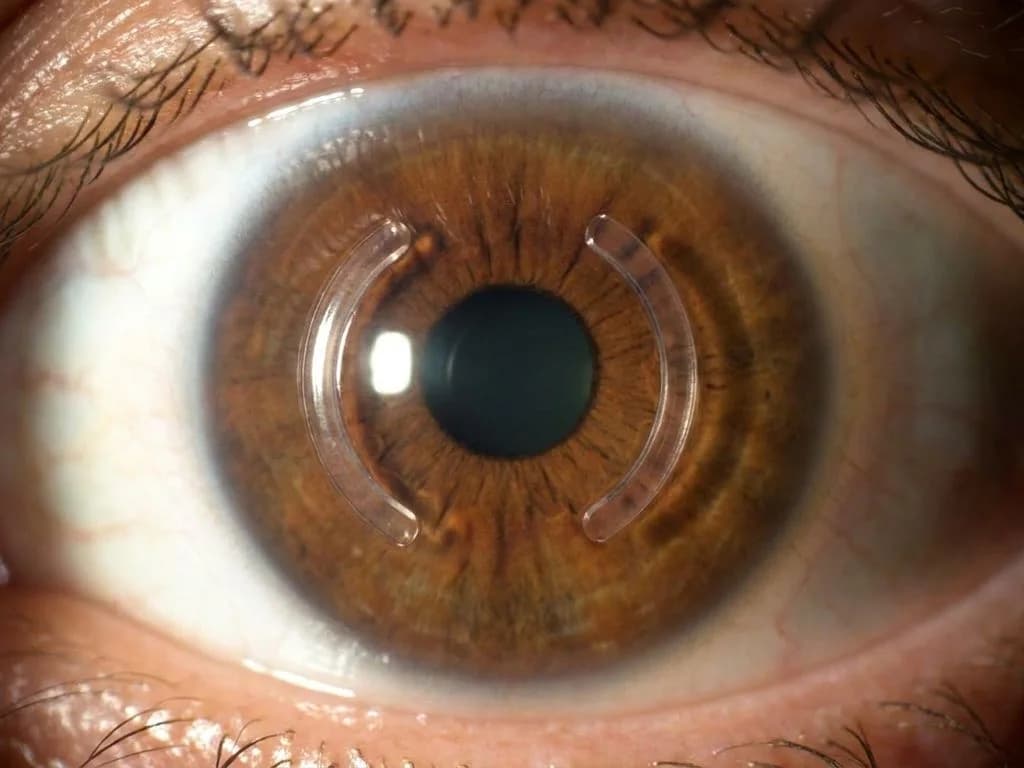
    Clinical image for NEET PG 2025 Q120

    The device shown in the image is “INTACS.” What is the primary indication for its use?

    A. Corneal ulcer
    B. Glaucoma
    C. Keratoconus
    D. Cataract

    Correct Answer: C. Keratoconus

    INTACS (Intrastromal Corneal Ring Segments) are semi-circular or full-ring polymethylmethacrylate (PMMA) implants surgically inserted into the corneal stroma at a depth of 300 micrometers. The primary indication is keratoconus, a progressive corneal ectasia where the cornea thins and cones forward. INTACS work by mechanically flattening the cornea and redistributing stromal tissue, thereby improving corneal topography and reducing astigmatism and myopia. This allows patients to achieve better uncorrected visual acuity and delays or prevents the need for corneal transplantation. In Indian clinical practice, keratoconus is relatively common, particularly in certain populations, and INTACS represent a corneal-sparing surgical option before corneal scarring mandates penetrating keratoplasty. The rings are reversible and removable, making them an attractive intermediate intervention. They are indicated in mild to moderate keratoconus (Amsler-Krumeich grades I–III) with clear central cornea and adequate corneal thickness (≥400 micrometers). INTACS do not address the underlying genetic defect but provide functional improvement and disease stabilization.

    Why the other options are wrong

    A. Corneal ulcer — Corneal ulcers are infectious or inflammatory defects requiring antimicrobial therapy, topical steroids, and bandage contact lenses—not structural implants. INTACS are contraindicated in active infection or scarring ulcers. This option confuses acute corneal pathology with chronic ectatic disease. B. Glaucoma — Glaucoma is managed by lowering intraocular pressure via medications, laser (SLT, ALT, cyclophotocoagulation), or filtration surgery (trabeculectomy, tube shunts). INTACS do not alter IOP and have no role in glaucoma management. This is a distractor testing knowledge of different corneal vs. anterior chamber pathologies. D. Cataract — Cataracts are managed by phacoemulsification and intraocular lens implantation—a lens-based problem, not a corneal one. INTACS address corneal shape, not lens opacity. This option tests whether students confuse corneal and lenticular surgical interventions.

    High-Yield Facts

    • INTACS are intrastromal PMMA ring segments inserted at 300 μm depth to flatten the cornea in keratoconus.
    • Keratoconus is a progressive corneal ectasia causing myopia, astigmatism, and cone formation; INTACS delay transplantation.
    • Amsler-Krumeich grades I–III keratoconus with clear central cornea and ≥400 μm thickness are ideal INTACS candidates.
    • INTACS are reversible and removable, unlike corneal transplantation, making them a corneal-sparing option.
    • Contraindications include active infection, severe scarring, thin cornea (<400 μm), and grades IV keratoconus.

    Mnemonics

    INTACS for Keratoconus Intrastromal New Technology Advanced Corneal Surgery = Rings for Keratoconus (not ulcers, glaucoma, or cataracts). When to use INTACS: 'CLEAR' Clear central cornea, Low-to-moderate grade (I–III), Enough thickness (≥400 μm), Astigmatism/myopia present, Reversible option desired.

    NBE Trap

    NBE pairs INTACS with corneal ulcer (option A) to trap students who conflate any corneal pathology with corneal surgery, forgetting that INTACS are specifically for ectatic disease, not inflammatory/infectious defects.

    Clinical Pearl

    In Indian tertiary eye centres, INTACS have become a popular bridge therapy for young keratoconus patients who are not yet candidates for corneal transplantation, allowing them to defer or avoid lifelong graft-related complications. A patient with Amsler-Krumeich grade II keratoconus and progressive myopia can achieve 1–2 lines of improvement in BCVA post-INTACS, significantly improving quality of life before transplantation becomes necessary.

    _Reference: Bailey & Love Ch. 37 (Cornea & Refractive Surgery); Parson's Diseases of the Eye (Keratoconus management)_

    Ask AI Tutor about this question

    Stuck on a distractor? Want a worked-through clinical scenario? The AI Tutor is a NEETPGAI Pro feature — sign up free to practice the full question bank, then unlock the AI Tutor when you're ready.

    Explain this concept in plain language
    Why is each wrong option wrong?
    Give me a clinical scenario where this is tested
    Sign up free Already have an account? Log in

    Free to start, no credit card required. The 3 prompts/day quota is shared with practice + tutor + deep-dive across NEETPGAI.

    Memory-based reconstruction

    NBE does not officially release NEET PG papers per the 2025 Supreme Court directive. This question was reconstructed from 1 community source: Diginerve NEET PG 2025 Recall PDF (200 Qs + answers). Cross-verified by Claude Haiku 4.5 + Gemini 2.5 Flash + community-aggregate vote, then reviewed by a practising medical SME.

    ← All NEET PG 2025 questionsPractice with AI Tutor →