Correct Answer: D. EMLA can lead to hemoglobinemia.
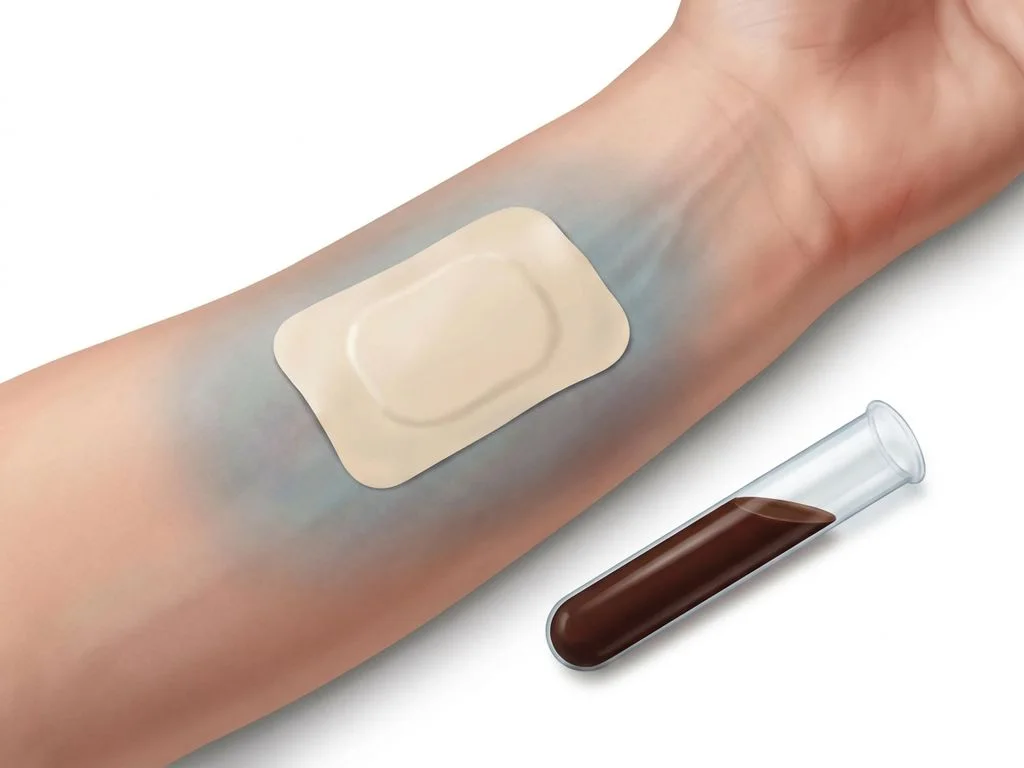
EMLA (Eutectic Mixture of Local Anesthetics) is a topical preparation containing 2.5% lidocaine and 2.5% prilocaine in an oil-in-water emulsion. The critical adverse effect being tested here is methemoglobinemia (not hemoglobinemia as stated in the option—this is likely a terminology issue in the question). Prilocaine, one of the two components, is metabolized to o-toluidine, which oxidizes hemoglobin to methemoglobin. This is particularly significant in infants and young children, where the risk is highest due to immature cytochrome P450 enzymes and reduced methemoglobin reductase activity. In Indian pediatric practice, EMLA is widely used for venipuncture and minor procedures, but the risk of methemoglobinemia mandates careful application—typically not exceeding 1 g/10 cm² for infants <3 months and limiting application time to 1 hour in this age group. The condition presents with cyanosis unresponsive to oxygen and can be life-threatening if methemoglobin levels exceed 70%. This is the only true statement among the options and represents a critical safety concern in Indian pediatric anesthesia practice.
Why the other options are wrong
A. EMLA acts within 15 minutes. — This is incorrect. EMLA requires 30–60 minutes for adequate topical anesthesia, with maximum effect at 60 minutes. The 15-minute timeframe is far too short for clinically useful anesthesia. This is a common misconception among junior residents who may confuse EMLA's onset with faster-acting agents like spray anesthetics. In Indian clinical settings, proper timing is essential to avoid patient dissatisfaction and procedural complications. B. EMLA contains ropivacaine and ligocaine — This is incorrect. EMLA contains lidocaine (lignocaine) and prilocaine, not ropivacaine. Ropivacaine is a long-acting amide local anesthetic used for regional blocks and infiltration, not a component of EMLA. This option may trap students who confuse amide local anesthetics or who are unfamiliar with EMLA's exact composition. The prilocaine component is the source of methemoglobinemia risk, making this distinction clinically important. C. EMLA contains 5% lignocaine — This is incorrect. EMLA contains 2.5% lidocaine (lignocaine), not 5%. The preparation is a eutectic mixture of equal parts (2.5% each) of lidocaine and prilocaine. A 5% concentration would be inappropriate for topical use and would increase toxicity risk. This option tests knowledge of EMLA's precise formulation, which is critical for safe dosing in Indian pediatric practice where overdosing could precipitate systemic toxicity.
High-Yield Facts
- EMLA composition: 2.5% lidocaine + 2.5% prilocaine in oil-in-water emulsion.
- Onset time: 30–60 minutes (not 15 minutes); maximum effect at 60 minutes.
- Methemoglobinemia risk: Prilocaine metabolite (o-toluidine) oxidizes hemoglobin; highest risk in infants <3 months and children <12 years.
- Maximum safe dose in infants: ≤1 g/10 cm² for <3 months; ≤2 g/10 cm² for 3–12 months; application time ≤1 hour in neonates.
- Clinical presentation of methemoglobinemia: Cyanosis unresponsive to oxygen, chocolate-brown blood on co-oximetry; treat with methylene blue 1–2 mg/kg IV if levels >20%.
- Contraindications: Avoid in infants <1 month, patients with G6PD deficiency, and those on methemoglobin-inducing drugs (sulfonamides, dapsone).
Mnemonics
EMLA Composition & Risk Equal parts (2.5% each) of Lidocaine and Prilocaine → Prilocaine causes Methemoglobinemia. Remember: EMLA = Equal Mix, Lidocaine + Prilocaine; Prilocaine = Problem (methemoglobinemia). EMLA Timing Rule 30–60 minutes for EMLA onset (not 15). Think: "EMLA needs an hour, not a quarter-hour." In Indian pediatric wards, always allow 45–60 minutes before venipuncture to avoid patient distress.
NBE Trap
NBE likely set this trap by using the term "hemoglobinemia" (which is non-specific) instead of the precise term "methemoglobinemia," hoping students would reject the option as technically incorrect. Additionally, the incorrect options test common misconceptions: onset time (15 vs. 30–60 min), composition (ropivacaine vs. prilocaine), and concentration (5% vs. 2.5%), all of which are frequently confused in Indian medical education.
Clinical Pearl
In Indian pediatric practice, EMLA is the gold standard for painless venipuncture in children, but never exceed 1 g/10 cm² in infants <3 months. A neonate presenting with unexplained cyanosis after EMLA application should raise suspicion for methemoglobinemia—check co-oximetry immediately and have methylene blue at bedside. This is a life-saving distinction in neonatal intensive care units across India.
_Reference: KD Tripathi Pharmacology Ch. 12 (Local Anesthetics); Harrison Principles of Internal Medicine Ch. 373 (Anesthesia); Bailey & Love Short Practice of Surgery Ch. 10 (Anesthesia)_