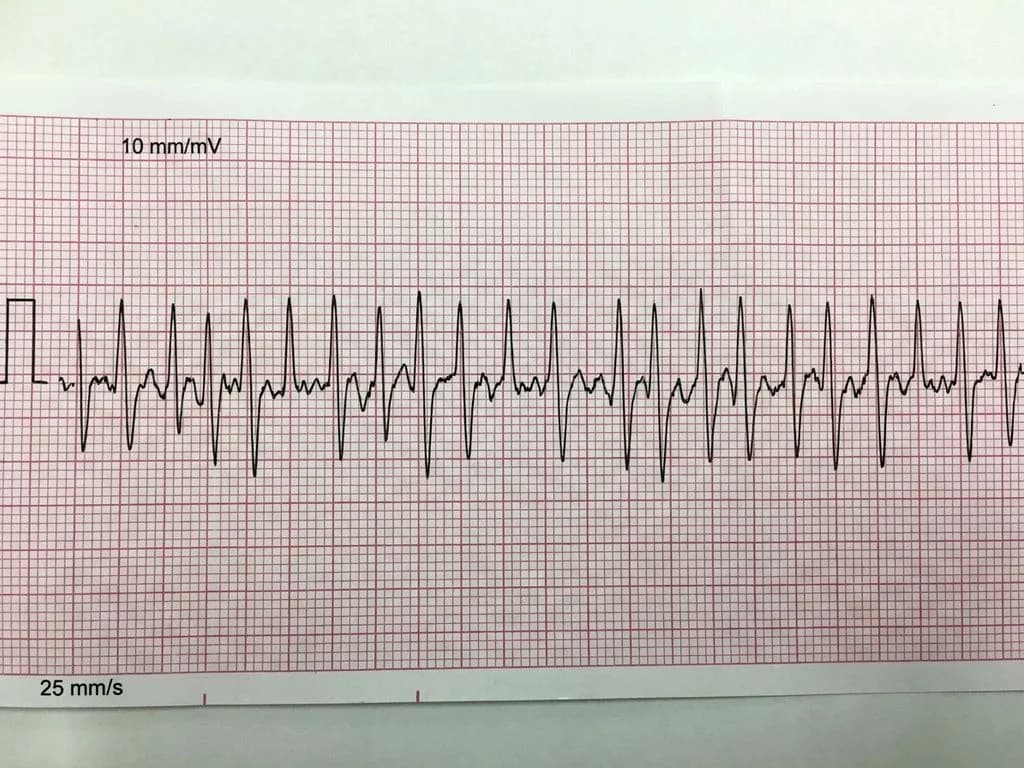
Correct Answer: D. Diltiazem
This patient presents with thyroid storm (severe restlessness, palpitations, tremors, elevated BP, tachycardia, atrial fibrillation) triggered by uncontrolled hyperthyroidism in a patient with bronchial asthma. The neck swelling suggests thyroid enlargement. Immediate management of thyroid storm requires three components: (1) antithyroid drugs to block hormone synthesis, (2) beta-blockers to control adrenergic symptoms, and (3) iodine to inhibit hormone release. However, the question asks for immediate management of the acute cardiac manifestation (atrial fibrillation with hemodynamic compromise). Diltiazem, a non-dihydropyridine calcium channel blocker, is the drug of choice here because it: (a) controls ventricular rate in atrial fibrillation without worsening bronchospasm (critical in asthmatic patients), (b) has negative inotropic and chronotropic effects, (c) provides immediate symptom relief within minutes of IV administration. Beta-blockers, while useful in thyroid storm, are contraindicated in asthma as they cause bronchospasm. Propylthiouracil is essential for long-term thyroid hormone suppression but does not provide immediate rate control. Thus, diltiazem addresses the acute life-threatening arrhythmia while being safe in the asthmatic patient.
Why the other options are wrong
A. Propylthiouracil — While PTU is a cornerstone of thyroid storm management (blocks thyroid peroxidase and hormone synthesis), it does NOT provide immediate rate control of atrial fibrillation. PTU takes 6–12 hours to show clinical effect. The question specifically asks for immediate management of the acute arrhythmia, not long-term thyroid suppression. PTU is given alongside rate-controlling agents, not instead of them. B. Esmolol — Esmolol is a short-acting, selective beta-1 blocker that would effectively control heart rate and reduce adrenergic symptoms in thyroid storm. However, it is CONTRAINDICATED in this patient because she has bronchial asthma. Beta-blockers cause bronchospasm and can precipitate acute asthma exacerbation. This is the critical discriminator—the patient's asthma makes any beta-blocker unsafe, regardless of selectivity. C. Propranolol — Propranolol is a non-selective beta-blocker traditionally used in thyroid storm for rapid symptom relief and also blocks peripheral conversion of T4 to T3 (additional benefit). However, like all beta-blockers, propranolol is absolutely contraindicated in asthmatic patients due to risk of severe bronchospasm. The patient's known asthma history makes this option dangerous, despite its theoretical efficacy in thyroid storm.
High-Yield Facts
- Thyroid storm + asthma = avoid all beta-blockers; use calcium channel blockers (diltiazem/verapamil) for rate control instead.
- Diltiazem IV onset is 2–5 minutes; controls ventricular rate in atrial fibrillation without bronchospasm risk.
- Thyroid storm management triad: antithyroid drugs (PTU/methimazole), beta-blockers (or CCBs if asthma), and iodine (Lugol's solution or SSKI after PTU).
- Propylthiouracil takes 6–12 hours for clinical effect; not for immediate rate control but essential for hormone suppression.
- Non-selective beta-blockers (propranolol) also block T4→T3 conversion, but contraindicated in asthma; selective agents (esmolol) still cause bronchospasm.
Mnemonics
ASTHMA + Thyroid Storm = CCB, NOT BB When asthma coexists with thyroid storm, remember: Calcium Channel Blocker (diltiazem/verapamil) for rate control, NOT Beta-Blocker. Beta-blockers cause bronchospasm. Thyroid Storm Immediate Rx: 'PADI' Propylthiouracil (antithyroid), Adrenergic blocker (beta-blocker or CCB), Dilute iodine (Lugol's), Intensive supportive care. In asthma, replace A with diltiazem.
NBE Trap
NBE pairs thyroid storm with beta-blockers (the classic teaching) to trap students who ignore the asthma history. The presence of bronchial asthma is the key discriminator that shifts the answer from propranolol/esmolol to diltiazem—a concept that requires integration of two clinical conditions.
Clinical Pearl
In Indian practice, thyroid storm is often seen in young women with undiagnosed or poorly controlled Graves' disease presenting to emergency departments. The combination of asthma and thyroid storm is a clinical trap—many junior doctors reflexively reach for propranolol (the textbook answer for thyroid storm) and miss the contraindication. Diltiazem or IV verapamil are safer alternatives that provide equivalent rate control without bronchospasm risk.
_Reference: Harrison Ch. 397 (Hyperthyroidism and Thyroid Storm); KD Tripathi Ch. 32 (Antithyroid Drugs)_