
NEETPGAI
FeaturesBlogComparePricing
Log inStart Free
NEETPGAI

AI-powered NEET PG preparation platform. Master all 19 subjects with adaptive MCQs, AI tutoring, and spaced repetition.

Product

  • Features
  • Subjects
  • Previous Year Questions
  • Compare
  • Pricing
  • Blog

Features

  • Adaptive MCQ Practice
  • AI Tutor
  • Mock Tests
  • Spaced Repetition

Resources

  • Blog
  • Study Guides
  • NEET PG Updates
  • Contact & support

Legal

  • Privacy Policy
  • Terms of Service

Stay updated

© 2026 NEETPGAI. All rights reserved.
    PYQs/2023/Q57
    Verified answer (AI cross-checked + SME reviewed)

    Q57 (2023, Larynx) — Correct answer: A. Total laryngectomy.
    NEET PG 2023
    Q57
    ear ENT
    Larynx
    tier-2 (3/3 verifier agreement)
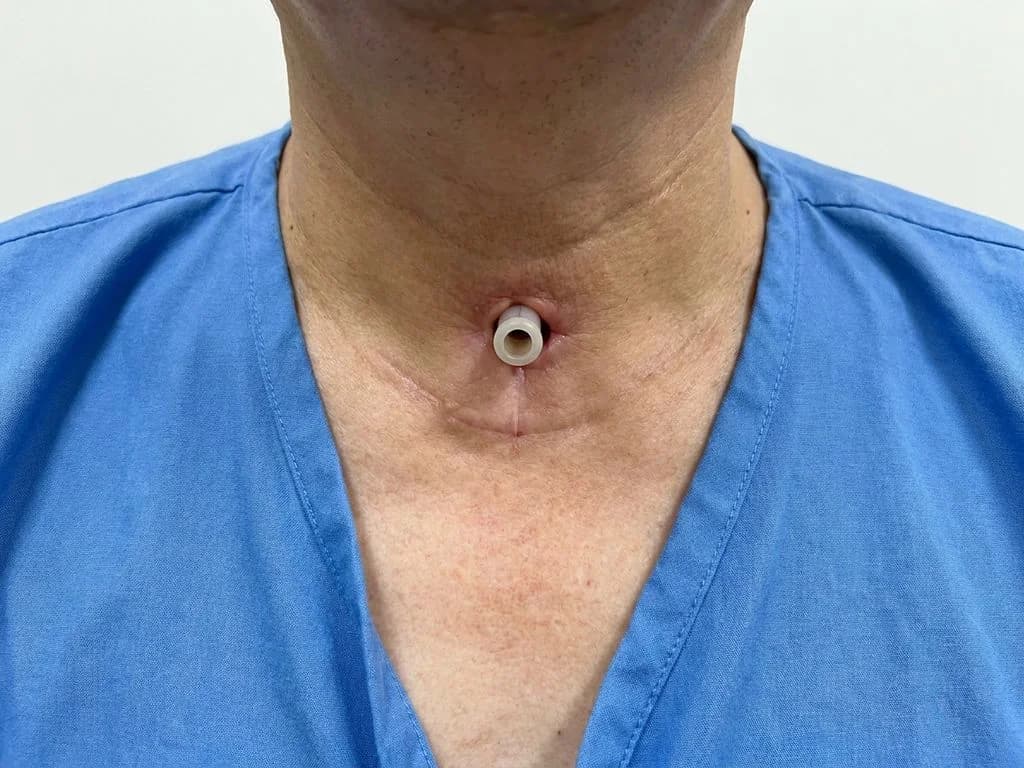
    Clinical image for NEET PG 2023 Q57

    A 55-year-old patient comes with hoarseness of voice and difficulty swallowing. The patient was diagnosed with laryngeal carcinoma, and surgical management was done. The post-operative image of the patient is given below. Which of the following surgery was done on this patient?

    A. Total laryngectomy
    B. Standard tracheostomy
    C. Partial laryngectomy
    D. Percutaneous tracheostomy

    Correct Answer: A. Total laryngectomy

    Total laryngectomy is the definitive surgical management for advanced laryngeal carcinoma (typically T3–T4 disease) when the tumor involves the vocal cords bilaterally, extends beyond the larynx, or compromises the anterior commissure. The post-operative image showing a permanent stoma in the lower neck (tracheo-cutaneous junction) is pathognomonic for total laryngectomy. In this procedure, the entire larynx, hyoid bone, and often the strap muscles are removed en bloc, with the proximal trachea brought out as a permanent tracheostomy. This differs fundamentally from partial laryngectomy (which preserves laryngeal function and voice) and from tracheostomy alone (which is merely an airway procedure, not oncologic resection). The permanent stoma visible in the post-operative image—positioned lower than a standard tracheostomy and serving as the sole airway—confirms total laryngectomy. In Indian practice, following RNTCP guidelines and institutional protocols, total laryngectomy remains the gold standard for T3–T4 laryngeal cancers, especially when radiation or chemoradiation is contraindicated or has failed. The patient will require voice rehabilitation via esophageal speech or electrolarynx post-operatively.

    Why the other options are wrong

    B. Standard tracheostomy — Tracheostomy is an airway procedure, not an oncologic resection. It does not remove the tumor-bearing larynx and is used for airway management in laryngeal cancer patients undergoing radiation or as a palliative measure. The post-operative image shows a permanent stoma from laryngeal removal, not a temporary tracheostomy tube placement. This is a trap for students who confuse airway management with definitive cancer surgery. C. Partial laryngectomy — Partial laryngectomy (vertical hemilaryngectomy, supraglottic laryngectomy) preserves laryngeal function and voice production, making it suitable only for early-stage (T1–T2) cancers confined to one vocal cord or supraglottic region. The post-operative image shows complete laryngeal removal with a permanent stoma, not partial preservation. Partial laryngectomy would not be appropriate for advanced disease and would not produce this imaging appearance. D. Percutaneous tracheostomy — Percutaneous tracheostomy is a minimally invasive airway procedure (Seldinger technique) used for short-term airway support, not for oncologic resection. It does not remove the larynx or treat the cancer. The permanent stoma in the image is from surgical laryngeal removal, not from a percutaneous airway access. This option conflates airway management with cancer surgery.

    High-Yield Facts

    • Total laryngectomy is indicated for T3–T4 laryngeal carcinoma, bilateral vocal cord involvement, or anterior commissure extension.
    • Permanent tracheostoma (tracheo-cutaneous stoma) is the hallmark post-operative finding in total laryngectomy, distinguishing it from temporary tracheostomy.
    • Partial laryngectomy preserves voice and is reserved for T1–T2 early-stage cancers; total laryngectomy sacrifices voice but achieves oncologic control in advanced disease.
    • Post-laryngectomy voice rehabilitation options include esophageal speech, electrolarynx, or tracheo-esophageal puncture (TEP) with voice prosthesis.
    • Tracheostomy alone (standard or percutaneous) is an airway procedure used for respiratory support in cancer patients, not for tumor resection.

    Mnemonics

    TOTAL vs PARTIAL Laryngectomy Total = T3–T4 (advanced), Tracheostoma (permanent); Partial = Preserved voice, Pearly stage (T1–T2). Use when deciding between larynx-sparing and larynx-removing surgery. Stoma Location Memory Hook Permanent stoma (total laryngectomy) sits lower on the neck at the tracheo-cutaneous junction; temporary tracheostomy is higher and can be decannulated. If the image shows a permanent lower stoma, think total laryngectomy.

    NBE Trap

    NBE pairs "tracheostomy" with laryngeal cancer to lure students who conflate airway management (tracheostomy) with oncologic resection (total laryngectomy). The key discriminator is the post-operative image showing a permanent stoma from laryngeal removal, not a tracheostomy tube for airway access.

    Clinical Pearl

    In Indian tertiary cancer centers, total laryngectomy remains the definitive procedure for advanced laryngeal cancer when chemoradiation is not feasible or has failed. Post-operative counseling must address permanent voice loss and the need for rehabilitation—a significant psychosocial burden in Indian patients, making early referral to speech-language pathology essential.

    _Reference: Bailey & Love Ch. 37 (Larynx); Robbins Ch. 16 (Head & Neck Cancers)_

    Ask AI Tutor about this question

    Stuck on a distractor? Want a worked-through clinical scenario? The AI Tutor is a NEETPGAI Pro feature — sign up free to practice the full question bank, then unlock the AI Tutor when you're ready.

    Explain this concept in plain language
    Why is each wrong option wrong?
    Give me a clinical scenario where this is tested
    Sign up free Already have an account? Log in

    Free to start, no credit card required. The 3 prompts/day quota is shared with practice + tutor + deep-dive across NEETPGAI.

    Memory-based reconstruction

    NBE does not officially release NEET PG papers per the 2025 Supreme Court directive. This question was reconstructed from 1 community source: PrepLadder NEET PG 2023 Recall PDF. Cross-verified by Claude Haiku 4.5 + Gemini 2.5 Flash + community-aggregate vote, then reviewed by a practising medical SME.

    ← All NEET PG 2023 questionsPractice with AI Tutor →