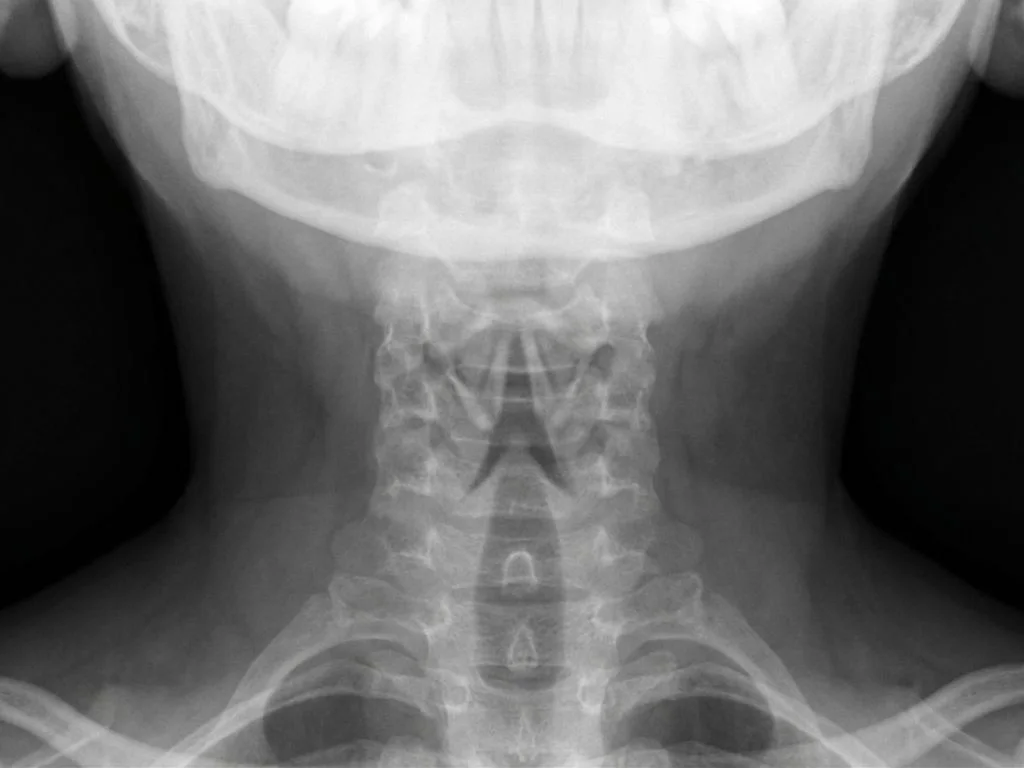
Correct Answer: B. Acute laryngotracheobronchitis
Acute laryngotracheobronchitis (croup) is the most common cause of upper airway obstruction in children aged 6 months to 3 years, typically following a viral prodrome (usually parainfluenza virus). The clinical presentation of biphasic stridor (heard during both inspiration and expiration) combined with respiratory distress is pathognomonic for subglottic involvement. The characteristic radiographic finding is the "steeple sign" — narrowing of the subglottic trachea on anteroposterior (AP) neck X-ray, caused by subglottic edema and inflammation. This narrowing of the subglottic region (below the vocal cords) creates the distinctive funnel-shaped appearance. The disease is self-limited, usually viral in etiology, and managed supportively with humidified oxygen, corticosteroids (dexamethasone 0.6 mg/kg), and nebulized epinephrine in severe cases. The biphasic stridor distinguishes it from purely inspiratory stridor (seen in laryngomalacia or epiglottitis) or purely expiratory stridor (seen in tracheomalacia). The steeple sign on X-ray is the gold standard radiological finding that confirms subglottic involvement, making croup the definitive diagnosis in this clinical scenario.
Why the other options are wrong
A. Acute epiglottitis — Epiglottitis presents with inspiratory stridor (not biphasic), drooling, dysphagia, and a characteristic 'thumb sign' on lateral neck X-ray (enlarged epiglottis). The child typically adopts a tripod position and has a 'hot potato' voice. Epiglottitis is a medical emergency requiring airway management and is now rare in India due to Hib vaccination. The steeple sign is absent in epiglottitis, ruling it out here. C. Laryngomalacia — Laryngomalacia is the most common cause of stridor in infants but presents with inspiratory stridor only (not biphasic), typically from birth or first weeks of life. It is a congenital condition due to abnormal supraglottic structures and is self-limiting by age 2 years. There is no fever, prodrome, or acute illness. The X-ray would be normal with no steeple sign, making this diagnosis incompatible with the acute presentation and radiographic findings. D. Foreign body aspiration — Foreign body aspiration typically presents with unilateral findings — asymmetric breath sounds, unilateral hyperinflation, or atelectasis on chest X-ray. The history usually includes a witnessed or suspected choking episode. Biphasic stridor is less common; stridor may be absent if the FB is in the lower airways. The steeple sign is not seen with FB aspiration, and the symmetric subglottic narrowing pattern is pathognomonic for croup, not FB.
High-Yield Facts
- Steeple sign on AP neck X-ray = subglottic narrowing in croup; pathognomonic finding
- Biphasic stridor = subglottic involvement; inspiratory stridor alone suggests supraglottic pathology
- Parainfluenza virus type 1 is the most common cause of croup; peak age 6 months–3 years
- Dexamethasone 0.6 mg/kg is the standard corticosteroid dose for croup in India; reduces symptom duration
- Nebulized epinephrine (1:1000, 0.5 mL/kg) used in severe croup with respiratory distress; onset in 10–15 minutes
- Croup is self-limited and viral; antibiotics are not indicated unless secondary bacterial infection suspected
Mnemonics
CROUP = Subglottic Croup = Cough + Respiratory distress + Outbreak (viral) + Upper airway + Pediatric. Remember: Croup = subglottic (steeple sign), Epiglottitis = supraglottic (thumb sign). Stridor Pattern Rule Inspiratory = Supraglottic (epiglottitis, laryngomalacia). Biphasic = Subglottic (croup). Expiratory = Intrathoracic (tracheomalacia). Use this to narrow diagnosis before imaging.
NBE Trap
NBE often pairs "biphasic stridor" with epiglottitis in students' minds because both cause respiratory distress; however, epiglottitis causes inspiratory stridor and thumb sign, not steeple sign. The trap is confusing stridor type with severity rather than anatomical location.
Clinical Pearl
In Indian pediatric practice, croup is the most common cause of acute stridor in toddlers presenting to emergency departments. A child with barky cough, biphasic stridor, and steeple sign on X-ray can be managed in most district hospitals with dexamethasone and supportive care; intubation is rarely needed if steroids are given early. Always rule out epiglottitis first in a toxic-appearing child with drooling.
_Reference: OP Ghai Pediatrics Ch. 12 (Respiratory Disorders); Harrison Ch. 254 (Acute Upper Airway Obstruction)_