
NEETPGAI
FeaturesBlogComparePricing
Log inStart Free
NEETPGAI

AI-powered NEET PG preparation platform. Master all 19 subjects with adaptive MCQs, AI tutoring, and spaced repetition.

Product

  • Features
  • Subjects
  • Previous Year Questions
  • Compare
  • Pricing
  • Blog

Features

  • Adaptive MCQ Practice
  • AI Tutor
  • Mock Tests
  • Spaced Repetition

Resources

  • Blog
  • Study Guides
  • NEET PG Updates
  • Contact & support

Legal

  • Privacy Policy
  • Terms of Service

Stay updated

© 2026 NEETPGAI. All rights reserved.
    PYQs/2023/Q179
    Verified answer (AI cross-checked + SME reviewed)

    Q179 (2023, Glaucoma) — Correct answer: D. Congenital glaucoma.
    NEET PG 2023
    Q179
    eye Ophthalmology
    Glaucoma
    tier-2 (3/3 verifier agreement)
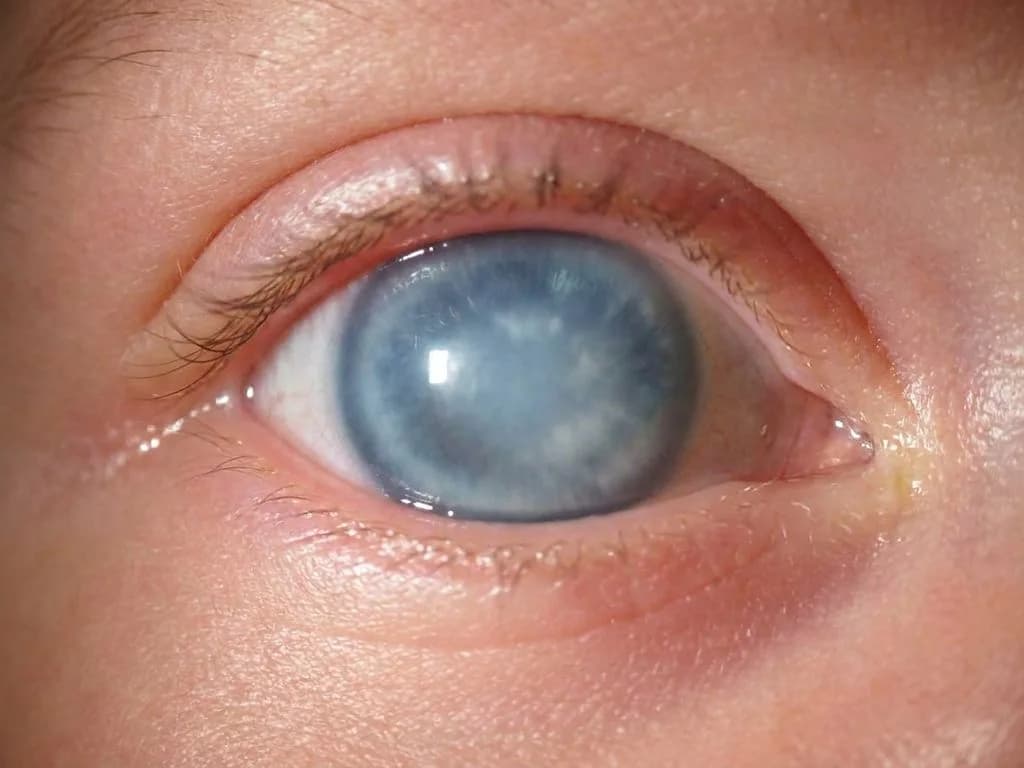
    Clinical image for NEET PG 2023 Q179

    An infant is brought with complaints of excessive watering of the eyes and photophobia. The image is given below. What is the likely diagnosis?

    A. Mucopolysaccharidosis
    B. Ophthalmia neonatorum
    C. Congenital cataract
    D. Congenital glaucoma

    Correct Answer: D. Congenital glaucoma

    Congenital glaucoma (infantile glaucoma) presents with the classic triad of epiphora (excessive tearing), photophobia, and blepharospasm in infants aged 0–3 years. The elevated intraocular pressure (IOP) from abnormal development of the trabecular meshwork or Schlemm's canal causes corneal irritation, leading to these symptoms. The image likely shows a hazy or enlarged cornea (due to corneal edema from raised IOP) and possibly a dilated pupil. Congenital glaucoma is an emergency requiring gonioscopy and tonometry to confirm elevated IOP (>21 mmHg in infants). The condition results from maldevelopment of angle structures (goniodysgenesis). Early diagnosis and surgical intervention (goniotomy, trabeculotomy, or trabeculectomy) are critical to prevent permanent vision loss and optic nerve damage. In Indian pediatric ophthalmology practice, this is one of the leading preventable causes of childhood blindness and must be ruled out in any infant presenting with the classic triad.

    Why the other options are wrong

    A. Mucopolysaccharidosis — While mucopolysaccharidosis (MPS) can cause corneal clouding and ocular manifestations, it typically presents with systemic features (hepatosplenomegaly, skeletal abnormalities, developmental delay) and progressive clouding rather than acute epiphora and photophobia. The acute presentation with the classic triad is not typical of MPS. MPS causes diffuse corneal opacity, not the acute irritative symptoms seen in congenital glaucoma. B. Ophthalmia neonatorum — Ophthalmia neonatorum (neonatal conjunctivitis) presents with purulent discharge, conjunctival injection, and eyelid swelling, typically appearing 1–7 days after birth. While it can cause photophobia, it does NOT cause the triad of epiphora, photophobia, and blepharospasm with corneal haze. The discharge is purulent (bacterial/chlamydial), not clear watering. IOP remains normal in ophthalmia neonatorum. C. Congenital cataract — Congenital cataracts present with leukocoria (white pupil), reduced visual behavior, and nystagmus, NOT the acute triad of epiphora, photophobia, and blepharospasm. While cataracts may cause photophobia due to glare, they do not cause excessive tearing or the corneal haze typical of raised IOP. IOP is normal in uncomplicated congenital cataracts.

    High-Yield Facts

    • Classic triad of congenital glaucoma: epiphora, photophobia, and blepharospasm in infants aged 0–3 years.
    • Goniodysgenesis (maldevelopment of trabecular meshwork/Schlemm's canal) is the pathological basis of congenital glaucoma.
    • Corneal edema from elevated IOP causes the hazy appearance and irritative symptoms; diameter >12 mm suggests glaucoma.
    • Tonometry and gonioscopy are diagnostic gold standards; IOP >21 mmHg in infants is abnormal.
    • Surgical intervention (goniotomy or trabeculotomy) is first-line treatment; medical therapy alone is insufficient.
    • Autosomal recessive inheritance in most cases; bilateral involvement in ~60% of patients.

    Mnemonics

    **EPIPHORA mnemonic for congenital glaucoma Excess tearing, Photophobia, Increased IOP, Pupil dilation, Hazy cornea, Optic nerve cupping, Raised intraocular pressure, Acute presentation in infants. 3 E's of congenital glaucoma Epiphora (tearing), Enlarged cornea (>12 mm), E**levated IOP (>21 mmHg). Use this to quickly recall the clinical presentation and key findings.

    NBE Trap

    NBE may pair congenital glaucoma with "corneal clouding" to lure students toward mucopolysaccharidosis or other storage disorders. The discriminator is the acute irritative triad (epiphora + photophobia + blepharospasm) with elevated IOP, not progressive systemic disease. Also, students may confuse ophthalmia neonatorum (purulent discharge) with congenital glaucoma (clear watering).

    Clinical Pearl

    In Indian pediatric outpatient departments, any infant brought with "excessive eye watering and light sensitivity" must trigger immediate IOP measurement and gonioscopy referral. Delayed diagnosis leads to irreversible optic nerve damage and blindness—this is a true ophthalmological emergency. Early surgical intervention can preserve vision in >90% of cases if caught within the first few months of life.

    _Reference: OP Ghai Pediatric Ophthalmology Ch. 8; Bailey & Love Ophthalmology Ch. 12 (Glaucoma in Children)_

    Ask AI Tutor about this question

    Stuck on a distractor? Want a worked-through clinical scenario? The AI Tutor is a NEETPGAI Pro feature — sign up free to practice the full question bank, then unlock the AI Tutor when you're ready.

    Explain this concept in plain language
    Why is each wrong option wrong?
    Give me a clinical scenario where this is tested
    Sign up free
    Memory-based reconstruction

    NBE does not officially release NEET PG papers per the 2025 Supreme Court directive. This question was reconstructed from 1 community source: PrepLadder NEET PG 2023 Recall PDF. Cross-verified by Claude Haiku 4.5 + Gemini 2.5 Flash + community-aggregate vote, then reviewed by a practising medical SME.

    ← All NEET PG 2023 questionsPractice with AI Tutor →
    Already have an account? Log in

    Free to start, no credit card required. The 3 prompts/day quota is shared with practice + tutor + deep-dive across NEETPGAI.