
NEETPGAI
FeaturesBlogComparePricing
Log inStart Free
NEETPGAI

AI-powered NEET PG preparation platform. Master all 19 subjects with adaptive MCQs, AI tutoring, and spaced repetition.

Product

  • Features
  • Subjects
  • Previous Year Questions
  • Compare
  • Pricing
  • Blog

Features

  • Adaptive MCQ Practice
  • AI Tutor
  • Mock Tests
  • Spaced Repetition

Resources

  • Blog
  • Study Guides
  • NEET PG Updates
  • Contact & support

Legal

  • Privacy Policy
  • Terms of Service

Stay updated

© 2026 NEETPGAI. All rights reserved.
    PYQs/2023/Q176
    Verified answer (AI cross-checked + SME reviewed)

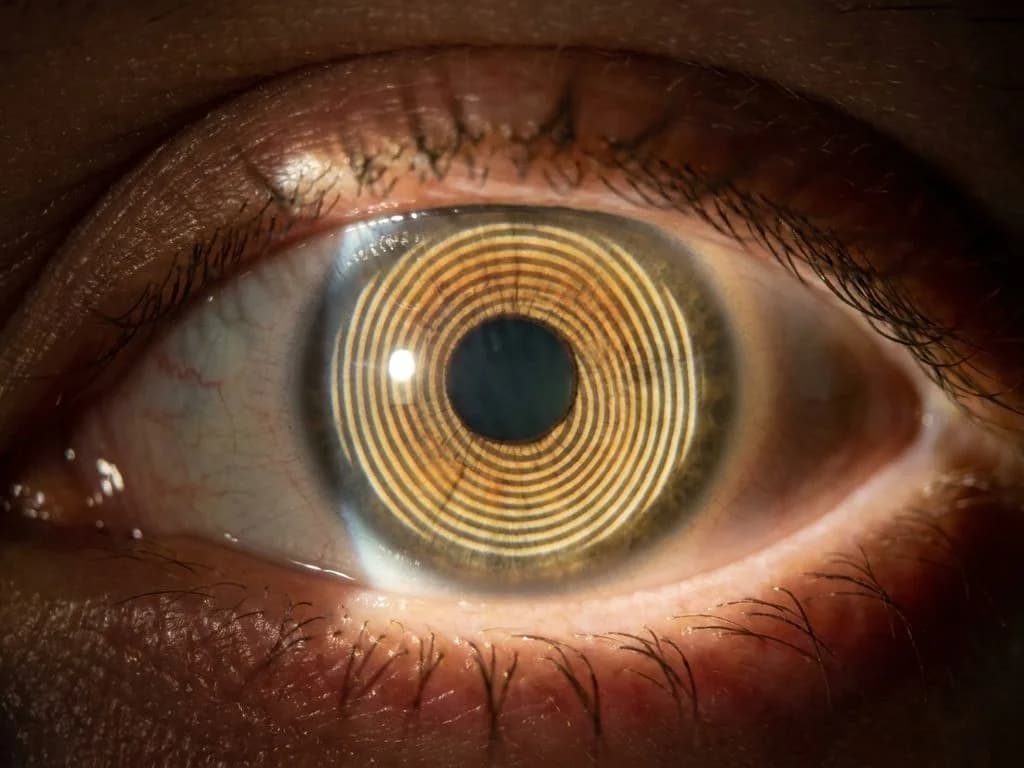
    Q176 (2023, Optics) — Correct answer: A. Astigmatism.
    NEET PG 2023
    Q176
    eye Ophthalmology
    Optics
    tier-3 (2/3 verifier agreement)
    Clinical image for NEET PG 2023 Q176

    Which of the following refractive errors is associated with the image given below?

    A. Astigmatism
    B. Myopia La d
    C. Presbyopia
    D. Hypermetropia

    Correct Answer: A. Astigmatism

    Astigmatism is a refractive error caused by unequal curvature of the cornea or lens, resulting in different focal lengths along different meridians. The classic diagnostic image for astigmatism shows the Astigmatic Chart (or Astigmatic Dial/Wheel), where the patient reports that certain meridional lines appear sharper or clearer than others. Typically, lines oriented in one direction (e.g., horizontal or vertical) appear crisp while perpendicular lines remain blurred. This meridional variation in clarity is pathognomonic for astigmatism and distinguishes it from other refractive errors. In India, astigmatism is highly prevalent (affecting 10–15% of the population), often coexisting with myopia or hypermetropia. The condition results from corneal astigmatism (most common, 90% of cases) or lenticular astigmatism. Correction requires cylindrical lenses with appropriate axis and power. The image in the question likely shows the classic Astigmatic Dial where concentric circles with radiating lines of varying orientations demonstrate differential clarity—the hallmark of astigmatism diagnosis.

    Why the other options are wrong

    B. Myopia — Myopia (short-sightedness) causes uniform blurring of distant objects due to excessive corneal curvature or axial length, not meridional variation. The Astigmatic Dial would show all lines equally blurred in myopia, not selective sharpness in one meridian. Myopia is corrected with concave lenses, not cylindrical lenses. This is an NBE trap for students who confuse any blurred vision with myopia. C. Presbyopia — Presbyopia is age-related loss of accommodation (typically after age 40) due to lens hardening, affecting near vision only. It does not cause meridional variation in clarity and is not diagnosed using the Astigmatic Dial. Presbyopia presents with difficulty reading small print, not selective line clarity. This option distracts students unfamiliar with the specific diagnostic image for astigmatism. D. Hypermetropia — Hypermetropia (long-sightedness) results from insufficient corneal power or short axial length, causing uniform blurring of near objects. Like myopia, it produces generalized blur without meridional selectivity. The Astigmatic Dial would show all lines equally blurred, not the characteristic pattern of alternating sharp and blurred meridians seen in astigmatism. Correction uses convex lenses, not cylinders.

    High-Yield Facts

    • Astigmatic Dial is the gold-standard diagnostic image: radiating lines appear selectively sharp in one meridian and blurred in the perpendicular meridian.
    • Corneal astigmatism accounts for ~90% of total astigmatism; lenticular astigmatism is less common.
    • Cylindrical lenses (not spherical) are required for correction; axis and power must match the meridional error.
    • Prevalence in India: astigmatism affects 10–15% of the population, often coexisting with myopia (mixed astigmatism).
    • Meridional variation is the discriminating feature: unlike myopia/hypermetropia (uniform blur), astigmatism shows differential clarity along different axes.

    Mnemonics

    ASTIGMATISM = Axis-Selective Tigmatic Image Meridional Variation Remember: Astigmatism shows selective sharpness along one axis (meridian) and blur along the perpendicular axis. The Astigmatic Dial exploits this by showing lines in all orientations—only one meridian will be clear. DIAL mnemonic for Astigmatism diagnosis Different meridians, Image clarity varies, Axis-dependent sharpness, Lines appear selectively clear. Use when interpreting the Astigmatic Dial chart.

    NBE Trap

    NBE pairs the Astigmatic Dial image with myopia and hypermetropia to trap students who confuse "blurred vision" with these refractive errors. The key discriminator is meridional selectivity—myopia and hypermetropia cause uniform blur, while astigmatism causes selective clarity in one meridian.

    Clinical Pearl

    In Indian clinical practice, astigmatism is often missed during routine screening because patients may not spontaneously report "lines appearing sharper in one direction"—they simply say "vision is blurred." The Astigmatic Dial is therefore essential in every refraction clinic to unmask meridional variation and avoid misdiagnosis as simple myopia or hypermetropia.

    _Reference: Harrison Ch. 28 (Refractive Errors); Robbins Ch. 29 (Eye pathology); Bailey & Love Ch. 39 (Ophthalmology)_

    Ask AI Tutor about this question

    Stuck on a distractor? Want a worked-through clinical scenario? The AI Tutor is a NEETPGAI Pro feature — sign up free to practice the full question bank, then unlock the AI Tutor when you're ready.

    Explain this concept in plain language
    Why is each wrong option wrong?
    Give me a clinical scenario where this is tested
    Sign up free Already have an account? Log in

    Free to start, no credit card required. The 3 prompts/day quota is shared with practice + tutor + deep-dive across NEETPGAI.

    Memory-based reconstruction

    NBE does not officially release NEET PG papers per the 2025 Supreme Court directive. This question was reconstructed from 1 community source: PrepLadder NEET PG 2023 Recall PDF. Cross-verified by Claude Haiku 4.5 + Gemini 2.5 Flash + community-aggregate vote, then reviewed by a practising medical SME.

    ← All NEET PG 2023 questionsPractice with AI Tutor →