
NEETPGAI
FeaturesBlogComparePricing
Log inStart Free
NEETPGAI

AI-powered NEET PG preparation platform. Master all 19 subjects with adaptive MCQs, AI tutoring, and spaced repetition.

Product

  • Features
  • Subjects
  • Previous Year Questions
  • Compare
  • Pricing
  • Blog

Features

  • Adaptive MCQ Practice
  • AI Tutor
  • Mock Tests
  • Spaced Repetition

Resources

  • Blog
  • Study Guides
  • NEET PG Updates
  • Contact & support

Legal

  • Privacy Policy
  • Terms of Service

Stay updated

© 2026 NEETPGAI. All rights reserved.
    PYQs/2023/Q137
    Verified answer (AI cross-checked + SME reviewed)

    Q137 (2023, Pulmonology) — Correct answer: C. Pancoast tumour.
    NEET PG 2023
    Q137
    stethoscope Medicine
    Pulmonology
    tier-2 (3/3 verifier agreement)
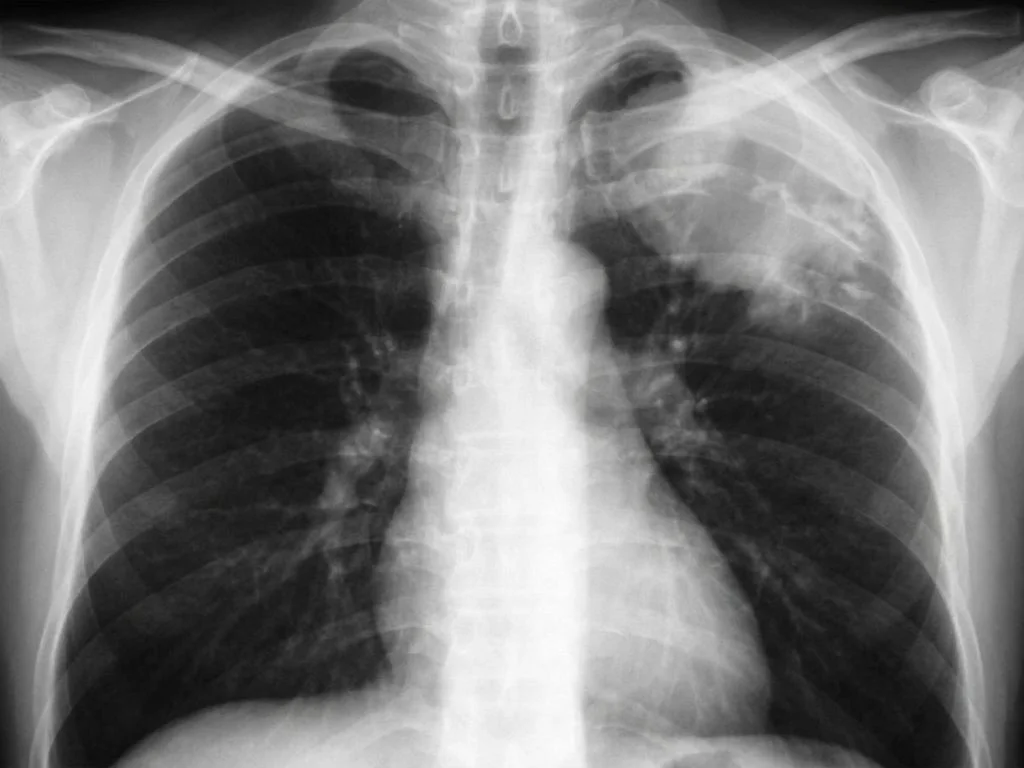
    Clinical image for NEET PG 2023 Q137

    A 65-year-old chronic smoker came to the medicine outpatient department with complaints of upper chest discomfort and drooping of an eyelid. He also complained of pain radiating to the upper arm and a tingling sensation in the 4th and 5th digits of his left hand. The chest X-ray is given below. La d Which of the following is the most likely diagnosis?

    A. Superior vena cava obstruction
    B. Upper lobe pneumonia
    C. Pancoast tumour
    D. Aspergilloma

    Correct Answer: C. Pancoast tumour

    Pancoast tumour (superior sulcus lung cancer) is a peripheral lung malignancy arising at the lung apex that invades the brachial plexus, subclavian vessels, and sympathetic chain. The clinical triad presented here is pathognomonic: (1) Horner's syndrome (drooping eyelid = ptosis, from sympathetic chain invasion), (2) Pancoast syndrome (upper chest pain radiating to the arm from brachial plexus involvement, particularly C8–T1 nerve roots), and (3) paresthesias in 4th and 5th digits (ulnar nerve distribution, confirming lower brachial plexus compression). The patient's smoking history and apical lung lesion on CXR complete the picture. Pancoast tumours account for 3–5% of all lung cancers but are the classic cause of this neurovascular syndrome. The diagnosis is confirmed by CT chest with contrast and tissue biopsy. Indian guidelines (RNTCP) classify this as locally advanced NSCLC requiring multimodal therapy (neoadjuvant chemotherapy + surgery ± radiotherapy).

    Why the other options are wrong

    A. Superior vena cava obstruction — SVC obstruction presents with facial plethora, neck vein distension, and upper limb oedema—none of which are described here. While Pancoast tumour can cause SVC obstruction, the specific neurological findings (Horner's + brachial plexus pain + ulnar paresthesias) point directly to apical tumour invasion, not just venous compression. This is an NBE trap for students who focus only on 'chest discomfort' without integrating the neurological syndrome. B. Upper lobe pneumonia — Pneumonia presents acutely with fever, productive cough, and systemic toxicity—none mentioned here. The chronic presentation, smoking history, and insidious neurological deficits (Horner's, brachial plexus syndrome) indicate a malignancy, not infection. CXR findings in pneumonia are consolidation with air bronchograms, not the apical mass typical of Pancoast tumour. This option tests whether students conflate upper lobe pathology with infection. D. Aspergilloma — Aspergilloma (fungal ball in pre-existing cavity) occurs in patients with prior TB or cavitary lung disease and presents with haemoptysis, not Horner's syndrome or brachial plexus neuropathy. While aspergilloma can occur in smokers with COPD, it does not cause the characteristic neurovascular syndrome described. The absence of haemoptysis and the specific neurological findings exclude this diagnosis.

    High-Yield Facts

    • Pancoast syndrome triad: Horner's syndrome (ptosis, miosis, anhidrosis) + brachial plexus pain (C8–T1) + paresthesias in ulnar distribution (4th–5th digits).
    • Pancoast tumour location: Superior sulcus (lung apex), typically NSCLC (squamous or adenocarcinoma) in smokers; accounts for 3–5% of lung cancers.
    • Sympathetic chain invasion causes Horner's syndrome by disrupting preganglionic fibres at T1 level; lower brachial plexus (C8–T1) invasion causes ulnar nerve symptoms.
    • Diagnostic imaging: CT chest with contrast + MRI for soft-tissue involvement; tissue diagnosis via bronchoscopy, transthoracic biopsy, or mediastinoscopy.
    • Indian DOC treatment: Neoadjuvant chemotherapy (cisplatin-based) followed by surgical resection (superior sulcus resection) ± adjuvant radiotherapy per RNTCP guidelines.

    Mnemonics

    PANCOAST Syndrome Pain (upper chest/arm), Arm paresthesias (ulnar), Neurological (Horner's), Cancer (apical), Occurs in smokers, Apex location, Superior sulcus, Tumour (NSCLC). Use when you see Horner's + brachial plexus pain in a smoker. Horner's Triad in Pancoast Ptosis (drooping lid), Miosis (small pupil), Anhidrosis (no sweating on forehead). Remember: sympathetic chain at T1 is invaded by apical tumour. Use to confirm the neurological component.

    NBE Trap

    NBE pairs 'upper chest discomfort' with SVC obstruction to distract from the neurological syndrome (Horner's + brachial plexus neuropathy) that is pathognomonic for Pancoast tumour. Students who focus only on vascular symptoms miss the key discriminator: the specific nerve root involvement (C8–T1 ulnar distribution).

    Clinical Pearl

    In Indian tertiary centres, Pancoast tumour is often diagnosed late because the neurological symptoms are initially attributed to cervical spondylosis or brachial neuritis. Always suspect apical malignancy in a chronic smoker with Horner's syndrome + ulnar nerve symptoms, even without prominent respiratory complaints. Early imaging and biopsy can enable multimodal therapy and improve survival.

    _Reference: Harrison Ch. 85 (Lung Cancer); Robbins Ch. 15 (Lung Neoplasms); KD Tripathi Ch. 12 (Anticancer Drugs)_

    Ask AI Tutor about this question

    Stuck on a distractor? Want a worked-through clinical scenario? The AI Tutor is a NEETPGAI Pro feature — sign up free to practice the full question bank, then unlock the AI Tutor when you're ready.

    Explain this concept in plain language
    Why is each wrong option wrong?
    Give me a clinical scenario where this is tested
    Sign up free Already have an account? Log in

    Free to start, no credit card required. The 3 prompts/day quota is shared with practice + tutor + deep-dive across NEETPGAI.

    Memory-based reconstruction

    NBE does not officially release NEET PG papers per the 2025 Supreme Court directive. This question was reconstructed from 1 community source: PrepLadder NEET PG 2023 Recall PDF. Cross-verified by Claude Haiku 4.5 + Gemini 2.5 Flash + community-aggregate vote, then reviewed by a practising medical SME.

    ← All NEET PG 2023 questionsPractice with AI Tutor →

    Join our NEET PG community

    Daily MCQs, study tips, and topper strategies on Telegram.

    Join on Telegram →