
NEETPGAI
FeaturesBlogComparePricing
Log inStart Free
NEETPGAI

AI-powered NEET PG preparation platform. Master all 19 subjects with adaptive MCQs, AI tutoring, and spaced repetition.

Product

  • Features
  • Subjects
  • Previous Year Questions
  • Compare
  • Pricing
  • Blog

Features

  • Adaptive MCQ Practice
  • AI Tutor
  • Mock Tests
  • Spaced Repetition

Resources

  • Blog
  • Study Guides
  • NEET PG Updates
  • Contact & support

Legal

  • Privacy Policy
  • Terms of Service

Stay updated

© 2026 NEETPGAI. All rights reserved.
    PYQs/2022/Q45
    Verified answer (AI cross-checked + SME reviewed)

    Q45 (2022, Gynecology) — Correct answer: C. Sertoli cell only syndrome.
    NEET PG 2022
    Q45
    baby OBG
    Gynecology
    tier-2 (3/3 verifier agreement)
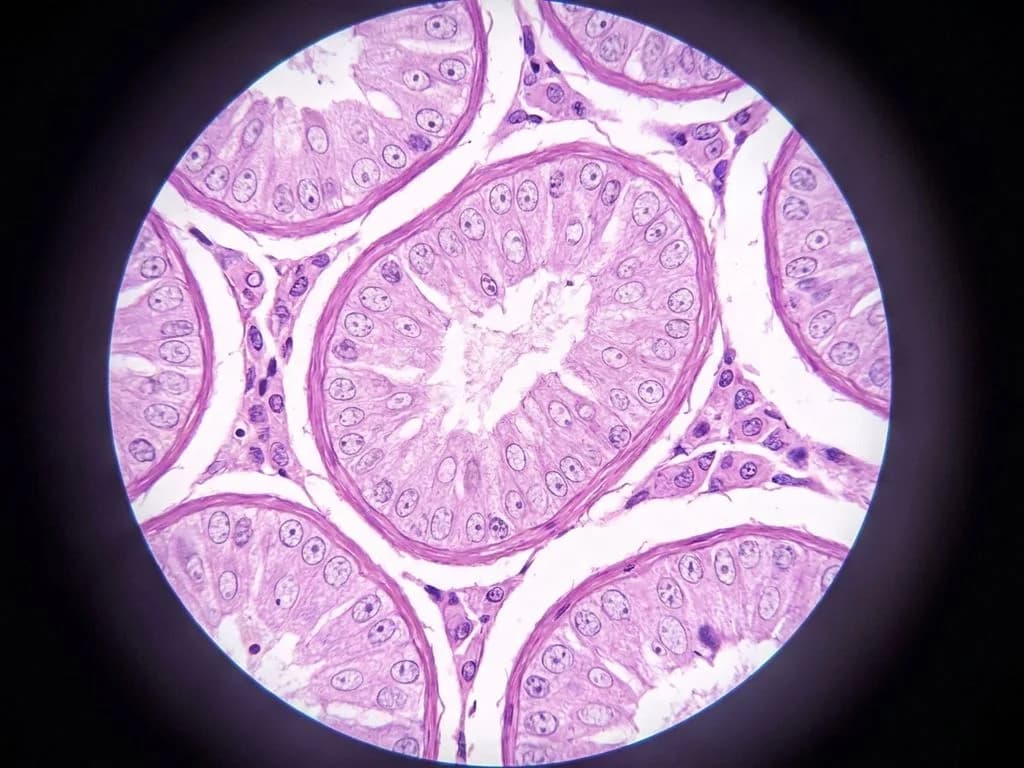
    Clinical image for NEET PG 2022 Q45

    A 25 year old male patient is evaluated for primary infertility. Semen analysis shows azoospermia. A testicular biopsy is done and the image is shown below. [image] The shown finding is consistent with [image]

    A. Benign testicular neoplasm
    B. Orchitis
    C. Sertoli cell only syndrome
    D. Testicular atrophy

    Correct Answer: C. Sertoli cell only syndrome

    Sertoli cell-only syndrome (SCOS), also called germinal aplasia, is characterized by the presence of only Sertoli cells lining the seminiferous tubules with complete absence of germ cells at all stages of spermatogenesis. On testicular biopsy, the histopathology shows seminiferous tubules lined exclusively by Sertoli cells with no spermatogenic cells, normal Leydig cells in the interstitium, and normal testicular volume. This results in azoospermia (zero sperm count) despite normal or near-normal testosterone levels, as Leydig cells remain functional. The patient presents with primary infertility due to the inability to produce sperm. SCOS accounts for approximately 10–15% of azoospermic men in India. The condition is either idiopathic or associated with genetic mutations (Y chromosome microdeletions in AZF regions). Unlike testicular atrophy, the tubular architecture is preserved; unlike orchitis, there is no inflammatory infiltrate; and unlike neoplasia, there is no abnormal cell proliferation. The biopsy findings—preserved tubular structure with Sertoli cells only—are pathognomonic for SCOS.

    Why the other options are wrong

    A. Benign testicular neoplasm — Neoplasms (Leydig cell tumors, Sertoli cell tumors) show abnormal cellular proliferation, disorganized architecture, and mitotic activity on biopsy. SCOS shows normal, orderly arrangement of Sertoli cells with no atypia or proliferation. Neoplasms typically present with a palpable mass or elevated tumor markers, not isolated azoospermia with normal testicular volume. B. Orchitis — Orchitis is characterized by inflammatory infiltrate (lymphocytes, plasma cells, neutrophils) within the interstitium and tubules, often with tubular necrosis and edema. SCOS shows no inflammation, normal interstitium, and preserved tubular architecture. Orchitis typically presents with acute pain, swelling, and fever; SCOS is asymptomatic and discovered during infertility workup. D. Testicular atrophy — Atrophy shows shrunken seminiferous tubules with reduced diameter, thickened basement membrane, and variable loss of germ cells (not complete absence). SCOS has normal or near-normal tubular diameter and architecture with selective, complete absence of germ cells only. Atrophy is secondary to prior injury (trauma, infection, torsion); SCOS is a primary developmental disorder.

    High-Yield Facts

    • Sertoli cell-only syndrome presents with azoospermia but normal/near-normal testosterone and testicular volume due to preserved Leydig cell function.
    • Histopathology shows seminiferous tubules lined by Sertoli cells alone with complete absence of germ cells at all stages and no inflammatory infiltrate.
    • Y chromosome microdeletions (AZF regions) are the most common genetic cause; idiopathic cases also occur in Indian populations.
    • SCOS accounts for 10–15% of azoospermic men and is the most common cause of non-obstructive azoospermia after hypogonadism.
    • Testosterone levels are normal or near-normal because Leydig cells are intact; FSH is markedly elevated due to lack of inhibin feedback from germ cells.
    • Diagnosis requires testicular biopsy as semen analysis alone cannot differentiate SCOS from obstructive azoospermia; biopsy is the gold standard.

    Mnemonics

    SCOS = Sertoli Only Sertoli cells Only = Sperm Output zero. Remember: Leydig cells intact (normal testosterone), Sertoli cells present but germ cells absent (azoospermia). SCOS vs Atrophy (Quick Discriminator) SCOS: Normal tubular size, complete germ cell absence. Atrophy: Shrunken tubules, partial germ cell loss. Think: SCOS is selective loss; atrophy is global shrinkage.

    NBE Trap

    NBE may pair azoospermia with testicular atrophy to trap students who assume all non-obstructive azoospermia involves tubular shrinkage. SCOS is unique because tubular architecture and volume are preserved—only germ cells are absent.

    Clinical Pearl

    In Indian infertility clinics, SCOS is increasingly recognized as a leading cause of non-obstructive azoospermia. A young man with primary infertility, azoospermia, and normal testicular volume should raise suspicion for SCOS—biopsy confirms diagnosis and rules out obstructive causes, guiding counseling on genetic testing (Y microdeletion) and assisted reproductive options (TESE/ICSI).

    _Reference: Robbins Ch. 21 (Male Reproductive System); Harrison Ch. 340 (Disorders of the Testis and Scrotum); OP Ghai Ch. 8 (Infertility)_

    Ask AI Tutor about this question

    Stuck on a distractor? Want a worked-through clinical scenario? The AI Tutor is a NEETPGAI Pro feature — sign up free to practice the full question bank, then unlock the AI Tutor when you're ready.

    Explain this concept in plain language
    Why is each wrong option wrong?
    Give me a clinical scenario where this is tested
    Sign up free Already have an account? Log in

    Free to start, no credit card required. The 3 prompts/day quota is shared with practice + tutor + deep-dive across NEETPGAI.

    Memory-based reconstruction

    NBE does not officially release NEET PG papers per the 2025 Supreme Court directive. This question was reconstructed from 1 community source: PrepLadder NEET PG 2022 Recall PDF. Cross-verified by Claude Haiku 4.5 + Gemini 2.5 Flash + community-aggregate vote, then reviewed by a practising medical SME.

    ← All NEET PG 2022 questionsPractice with AI Tutor →

    Join our NEET PG community

    Daily MCQs, study tips, and topper strategies on Telegram.

    Join on Telegram →