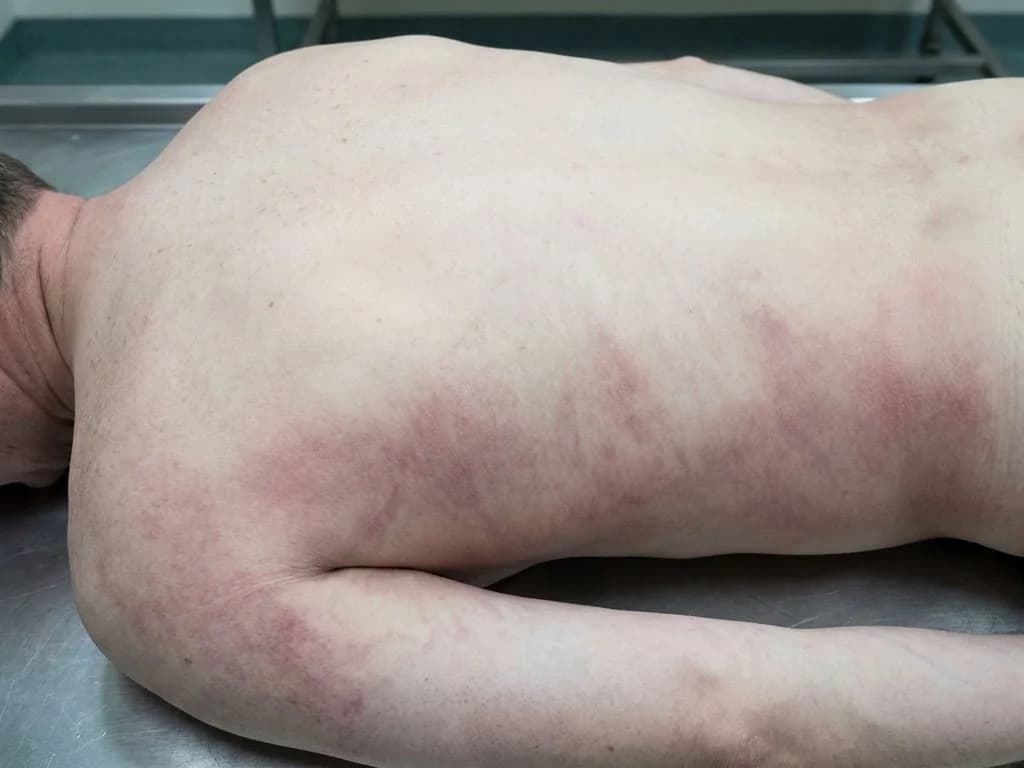
Correct Answer: A. Due to sulfhemoglobin accumulation and formation
The post-mortem change described is livor mortis (hypostasis), which appears as purple-red discoloration in dependent areas after death. The discriminating fact is that the greenish discoloration of the abdomen—a progression of livor mortis—occurs due to sulfhemoglobin formation. After death, bacterial putrefaction in the intestines produces hydrogen sulfide (H₂S), which reacts with hemoglobin to form sulfhemoglobin, a greenish pigment. This is distinct from the initial purple-red livor mortis caused by deoxygenated hemoglobin accumulation in dependent vessels. The sulfhemoglobin formation is a bacterial putrefactive process, not aseptic. The greenish discoloration typically appears 24–48 hours post-mortem but can be delayed depending on environmental temperature and bacterial flora. In Indian forensic practice, recognizing this progression helps establish the post-mortem interval and distinguish it from other causes of discoloration (e.g., carbon monoxide poisoning causing cherry-red discoloration, or cyanide poisoning). The formation of sulfhemoglobin is pathognomonic for putrefactive changes and is a key marker in the Ransohoff triad of putrefaction.
Why the other options are wrong
B. Seen within 24 hours of death — This is incorrect because the greenish discoloration due to sulfhemoglobin formation typically appears 24–48 hours or later post-mortem, not within 24 hours. The initial purple-red livor mortis appears within 30 minutes to 12 hours, but the progression to greenish sulfhemoglobin requires time for bacterial putrefaction to generate sufficient H₂S. This is a common NBE trap—confusing the timeline of livor mortis onset with the later sulfhemoglobin stage. C. Due to aseptic non-bacterial cause — This is fundamentally wrong because sulfhemoglobin formation is exclusively a bacterial putrefactive process. The hydrogen sulfide required to form sulfhemoglobin is produced by anaerobic bacteria (Clostridium, E. coli) in the intestines during putrefaction. Aseptic (non-bacterial) causes like autolysis or chemical oxidation do not produce H₂S and therefore cannot cause sulfhemoglobin formation. This option directly contradicts the mechanism of the post-mortem change. D. It is associated with a case of lightning — Lightning injury causes Lichtenberg figures (branching erythematous marks) and cherry-red discoloration due to carboxyhemoglobin formation, not sulfhemoglobin. The greenish discoloration from sulfhemoglobin is unrelated to electrical injury. This option confuses different post-mortem signs associated with different causes of death—a classic NBE distractor in forensic thanatology.
High-Yield Facts
- Sulfhemoglobin forms when H₂S (from bacterial putrefaction) reacts with hemoglobin, producing greenish discoloration in dependent areas.
- Greenish discoloration typically appears 24–48 hours post-mortem and marks the progression from initial purple-red livor mortis.
- Hydrogen sulfide is produced by anaerobic bacteria (Clostridium, E. coli) in the intestines, making sulfhemoglobin formation a bacterial putrefactive process.
- Ransohoff triad of putrefaction includes greenish discoloration, marbling, and gas distension—all bacterial-dependent changes.
- Cherry-red discoloration (not greenish) occurs in CO poisoning (carboxyhemoglobin) and cyanide poisoning, distinguishing them from sulfhemoglobin changes.
Mnemonics
SULFHEMOGLOBIN = Sulfide + Hemoglobin Sulfide (H₂S from Bacteria → Hemoglobin = Greenish discoloration. Appears 24–48 hours post-mortem. Use this when you see greenish abdomen in a post-mortem image. LIVOR PROGRESSION: Purple → Green Purple-red (deoxygenated Hb, 0–12 hours) → Greenish (sulfhemoglobin, 24–48 hours). Remember: bacteria make the green, not chemicals.
NBE Trap
NBE pairs "post-mortem discoloration" with "within 24 hours" to trap students who confuse the onset of initial livor mortis (which does appear early) with the later greenish sulfhemoglobin stage. Additionally, pairing sulfhemoglobin with "aseptic" or "lightning" distracts from the core concept that sulfhemoglobin is exclusively a bacterial putrefactive phenomenon.
Clinical Pearl
In Indian medicolegal practice, the presence of greenish discoloration of the abdomen is a critical marker for establishing post-mortem interval in decomposed bodies. It also helps distinguish natural death with putrefaction from poisoning cases (e.g., cyanide causing cherry-red discoloration). Recognizing sulfhemoglobin formation is essential for accurate autopsy reporting in Indian courts.
_Reference: Robbins Ch. 1 (Post-mortem Changes); Forensic Medicine & Toxicology (Reddy, 34th ed.) Ch. 3 (Thanatology)_