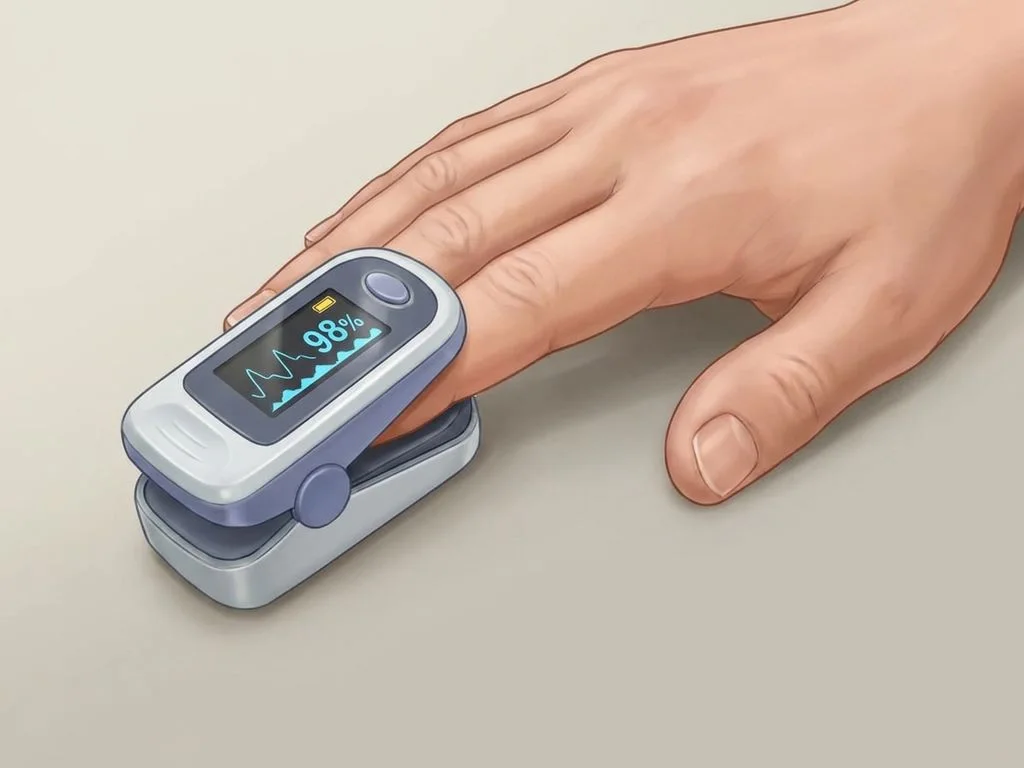
Correct Answer: D. Oxygen saturation
The device shown is a pulse oximeter, the gold standard non-invasive monitor in Indian operating theatres and ICUs. Pulse oximetry measures oxygen saturation (SpO₂) — the percentage of hemoglobin binding sites occupied by oxygen molecules. The pulse oximeter uses two light-emitting diodes (red 660 nm and infrared 940 nm wavelengths) to detect the differential absorption of light by oxygenated and deoxygenated hemoglobin in pulsatile arterial blood. The ratio of absorption at these wavelengths is converted via a calibration curve to display SpO₂ as a percentage (normal range 95–100% on room air at sea level). This is a functional saturation measurement — the ratio of oxygenated hemoglobin to total hemoglobin (HbO₂ + Hb), excluding dysfunctional hemoglobins like carboxyhemoglobin or methemoglobin in routine clinical use. Pulse oximetry is mandated in Indian anesthesia guidelines (ASA equivalent) as a continuous monitor during general anesthesia, sedation, and critical care. It provides real-time, beat-to-beat assessment of oxygenation status and is the most practical bedside tool for detecting hypoxemia early — critical in a resource-limited setting where ABG analysis may not be immediately available.
Why the other options are wrong
A. Amount of inspired oxygen — This refers to the FiO₂ (fraction of inspired oxygen) — a ventilator or gas delivery parameter set by the anesthesiologist, NOT measured by pulse oximetry. FiO₂ is controlled (e.g., 21% room air, 40% via face mask, 100% via intubation) but pulse oximetry measures the result of oxygenation, not the input. NBE may trap students who confuse oxygen delivery parameters with oxygenation monitoring. B. Partial pressure of oxygen — PaO₂ (arterial partial pressure of oxygen) is measured only by arterial blood gas (ABG) analysis, not pulse oximetry. While SpO₂ correlates with PaO₂ via the oxygen-hemoglobin dissociation curve, pulse oximetry cannot directly measure pressure. This is a classic NBE trap: students confuse saturation (percentage) with partial pressure (mmHg). ABG is invasive and requires laboratory analysis; pulse oximetry is non-invasive and real-time. C. Oxygen content of the blood — CaO₂ (arterial oxygen content) = (Hb × 1.34 × SaO₂) + (0.003 × PaO₂) — a calculated parameter requiring hemoglobin level, saturation, AND partial pressure. Pulse oximetry measures only saturation; it cannot calculate oxygen content without knowing hemoglobin concentration. This trap targets students who conflate saturation with content, a common misconception in Indian medical curricula.
High-Yield Facts
- Pulse oximetry measures SpO₂ (functional oxygen saturation) — percentage of oxygenated hemoglobin, NOT PaO₂ or FiO₂.
- Normal SpO₂ is 95–100% on room air at sea level; SpO₂ <90% indicates hypoxemia and requires immediate intervention.
- Pulse oximetry uses two wavelengths (red 660 nm, infrared 940 nm) to differentiate oxygenated from deoxygenated hemoglobin.
- Limitations: pulse oximetry fails in severe hypotension, hypothermia, carbon monoxide poisoning (carboxyhemoglobin), and methemoglobinemia — ABG is required in these cases.
- Mandatory monitor in Indian anesthesia guidelines (ASA equivalent) for all general anesthesia, sedation, and critical care — non-negotiable standard of care.
Mnemonics
SpO₂ vs PaO₂ vs FiO₂ Saturation (%) = pulse oximetry | Pressure (mmHg) = ABG | Fraction (%) = ventilator setting. Remember: SpO₂ is what you measure, PaO₂ is what you analyze, FiO₂ is what you set. Pulse Ox Wavelengths RED (660 nm) absorbs more in deoxygenated Hb | IR (940 nm) absorbs more in oxygenated Hb. The ratio tells you saturation. Use when differentiating why pulse ox works.
NBE Trap
NBE pairs "oxygen measurement" with multiple parameters (FiO₂, PaO₂, CaO₂, SpO₂) to test whether students understand the specific output of pulse oximetry. The trap is conflating saturation (percentage, non-invasive, real-time) with pressure (mmHg, invasive, ABG-only) or delivery parameters (FiO₂, set by operator).
Clinical Pearl
In Indian operating theatres and ICUs, pulse oximetry is the first sign of trouble — a sudden drop in SpO₂ alerts you to hypoxemia before the patient becomes cyanotic or hemodynamically unstable. In a resource-limited setting without immediate ABG capability, SpO₂ trending is your lifeline for titrating oxygen therapy and detecting airway obstruction or ventilator malfunction in real time.
_Reference: Harrison Ch. 295 (Respiratory Monitoring); Guyton & Hall Ch. 41 (Oxygen Transport); KD Tripathi Ch. 8 (Respiratory Physiology)_